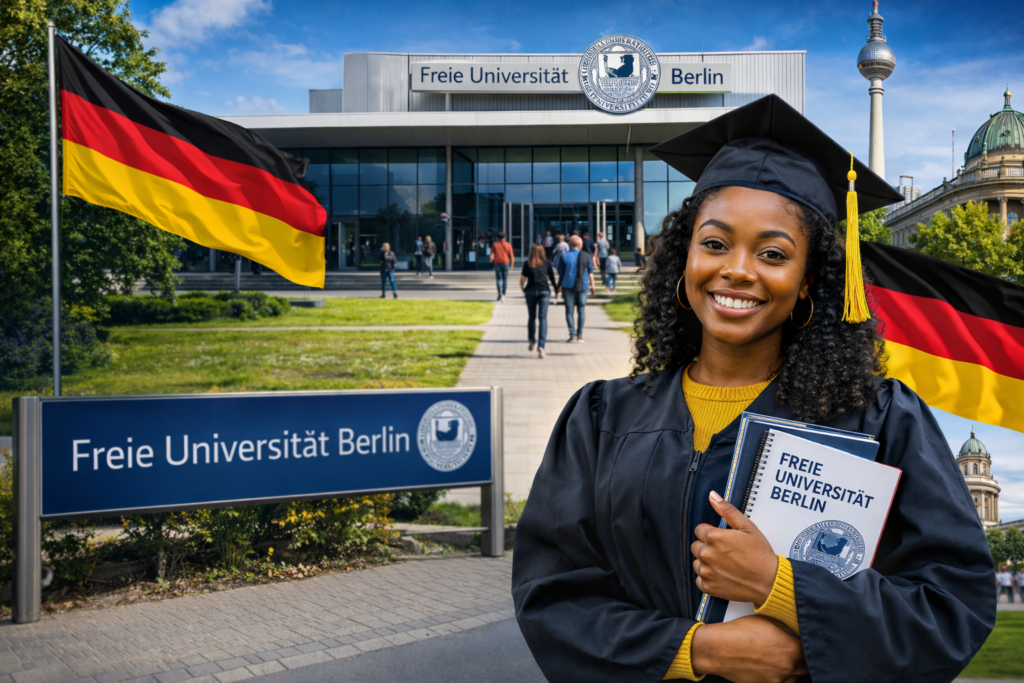
Free University of Berlin
Why the Free University of Berlin Is a Golden Opportunity in 2026
If you’ve ever dreamed of studying in Europe but felt held back by high tuition fees or IELTS requirements, this guide might just change your life.
The Free University of Berlin stands as one of Germany’s most prestigious institutions—offering world-class education, zero tuition fees, and access to fully funded opportunities like the DAAD scholarship. For many international students—especially Africans—this is more than education; it’s a pathway to global exposure, career transformation, and financial freedom.
In 2026, the opportunity is even bigger.
Germany continues to dominate global education trends, with increasing demand for:
- Study in Germany 2026
- Germany scholarships
- Fully funded programs without IELTS
But here’s the truth:
Many students apply…
Few truly understand the strategy behind getting accepted
That’s why this guide reveals 10 proven secrets—not just theory, but practical steps—to help you stand out and secure a life-changing scholarship.

Free University of Berlin Admission Requirements for International Students 2026
Before diving into the secrets, you need clarity on what the university actually expects.
General Requirements:
- Recognized secondary or bachelor’s degree
- Academic transcripts
- Statement of purpose (SOP)
- CV/Resume
- Letters of recommendation
- Proof of English or German proficiency
Key Insight:
Many applicants assume IELTS is mandatory—but that’s not always true.
How to Study in Germany Without IELTS 2026 for African Students
Germany offers flexible alternatives for English proof.
Accepted Alternatives:
- Medium of Instruction (MOI) certificate
- Previous education in English
- Internal university language assessments
This makes it possible to study in Germany without IELTS, especially at institutions like the Free University of Berlin.
For official scholarship guidelines, refer to
https://www.daad.de/en/study-and-research-in-germany/scholarships/
Comparison Table: IELTS vs No IELTS Pathway for Study in Germany 2026
| Criteria | With IELTS | Without IELTS |
|---|---|---|
| Application Cost | High | Low |
| Processing Time | Longer | Faster |
| Accessibility | Limited | More inclusive |
| Popularity | Common | Trending in 2026 |
| Acceptance Flexibility | Moderate | High (case-based) |
10 Proven Secrets to Secure Germany Scholarships at Free University of Berlin
Secret 1: Master the “Why Germany?” Narrative
Your application must answer one key question:
Why Germany scholarships and not another country?
Focus on:
- Germany’s tuition-free system
- Strong research ecosystem
- Career opportunities post-study
Secret 2: Target DAAD Scholarship Opportunities Early
The DAAD scholarship is the most competitive and rewarding.
Why DAAD matters:
- Covers tuition
- Monthly stipend
- Travel allowance
- Health insurance
Explore details here:
https://www.fu-berlin.de/en/studium/international/index.html
Secret 3: Build a Strategic Academic Profile
To stand out:
- Maintain a strong GPA
- Participate in research
- Gain internships
Secret 4: Write a Powerful Statement of Purpose
Your SOP should:
- Tell your story
- Show career vision
- Align with Germany’s goals
Avoid generic writing—make it personal and compelling.
Secret 5: Choose the Right Program Carefully
Not all programs have equal competition.
Tip:
- Apply to programs aligned with your background
- Avoid oversaturated courses
Secret 6: Highlight International Relevance
Show how your studies will:
- Impact your home country
- Contribute globally
This is especially important for fully funded scholarships in Germany without IELTS 2026 DAAD guide.
Secret 7: Perfect Your Documentation
Ensure:
- No errors
- Clear formatting
- Professional presentation
Secret 8: Apply Early (Critical for Study in Germany 2026)
Deadlines matter more than you think.
Benefits of early application:
- Higher acceptance rate
- More scholarship consideration
- Less competition
Secret 9: Secure Strong Recommendation Letters
Choose referees who:
- Know your work well
- Can speak in detail
Secret 10: Follow a Step by Step Application Strategy
This is your ultimate roadmap:
Step by Step How to Get into Free University of Berlin with Scholarship 2026:
- Research programs
- Prepare documents
- Secure MOI or language proof
- Apply for admission
- Apply for DAAD scholarship
- Attend interviews (if required)
- Wait for decision
Key Insights: Why Study in Germany 2026 Is Trending
- Tuition-free education
- Strong economy
- High employability rate
- No IELTS options increasing
Common Mistakes to Avoid
- Applying late
- Weak SOP
- Ignoring scholarship deadlines
- Submitting incomplete documents
Your Opportunity Is Real
Getting into the Free University of Berlin is not just a dream—it’s achievable with the right strategy.
The reality is simple:
- Opportunities are growing
- Competition is increasing
- Preparation is everything
If you apply these 10 proven secrets, you position yourself among the top candidates.
Scholarships and Funding Opportunities at Free University of Berlin
Securing financial support can make studying abroad much more manageable. Even though tuition at many German universities is low or free, students still need to cover living expenses, travel, and other essentials. Fortunately, there are several funding options available that can help you focus on your studies without worrying about costs.
Why Funding Matters
While tuition might be minimal, day-to-day expenses in Berlin can add up, including:
- Housing and utilities
- Food and personal expenses
- Health insurance
- Transportation
Scholarships and grants can significantly reduce these burdens, allowing students to fully concentrate on their academic and research goals.
Major Scholarship Opportunities
- DAAD Funding Programs
- Offers financial support to international students pursuing various levels of study.
- Covers living costs, and in some cases, tuition and travel.
- University-Specific Grants
- The university occasionally provides merit-based awards and emergency support for enrolled students.
- Erasmus+ Exchange Programs
- Provides funding for students participating in exchange or mobility programs across Europe.
- Foundation and Organization Support
- Many German foundations provide grants for students demonstrating academic excellence or leadership skills.
Comparison Table: Funding Options
| Funding Source | Coverage | Best For | Application Difficulty |
|---|---|---|---|
| DAAD Programs | Living + partial tuition | All students | High |
| University Grants | Partial | Current students | Medium |
| Erasmus+ | Travel + stipend | Exchange participants | Medium |
| Foundations | Partial/Full | Leadership-oriented students | High |
How to Choose
Selecting the right funding opportunity depends on:
- Your level of study
- Field of interest
- Personal goals and leadership experience
- Timeline and application deadlines
Strategic planning and careful research will help you maximize the available opportunities and reduce financial stress during your studies.
Key Insight
Scholarships aren’t just about money—they open doors to new experiences, networking opportunities, and personal growth. With the right preparation, international students can make the most of what Berlin and Germany have to offer without letting finances hold them back.

Step-by-Step Guide to Applying for Free University of Berlin
Applying to a university abroad can seem overwhelming, but breaking it into clear steps makes the process manageable. This section provides a practical roadmap for international students aiming to secure admission and funding at a top German university in 2026.
Step 1: Research Available Programs
Before starting your application, take time to explore programs that match your academic background and career goals.
Tips:
- Check the official university catalog online
- Look for courses taught in English if needed
- Compare eligibility criteria for each program
Step 2: Prepare Required Documents
Applications require several key documents. Preparing them carefully will make your application stronger.
Essential Items:
- Academic transcripts and certificates (translated if necessary)
- Updated CV
- Statement of Purpose (SOP)
- Recommendation letters
- Copy of passport
Pro Tip: A clear SOP and strong recommendation letters can greatly improve your chances, even if your grades are average.
Step 3: Write a Compelling Statement of Purpose
The SOP is your chance to tell your story. It should highlight:
- Your academic journey and achievements
- Your motivation for choosing the program
- Career goals and how the program aligns with them
Keep it personal and avoid generic templates. Admissions committees value authenticity.
Step 4: Submit Your Application
Most applications are completed online. Be sure to:
- Double-check all entries
- Upload correct documents
- Submit before the stated deadline
Missing deadlines is one of the most common reasons applications fail.
Step 5: Explore Scholarship Opportunities
After submitting your application, look for financial support options:
- Government or foundation scholarships
- University-specific funding programs
- International exchange or mobility programs
Applying early increases your chances of success.
Step 6: Track Timelines
Deadlines can vary depending on the program or scholarship. Keep a calendar to track:
- Application deadlines
- Scholarship submissions
- Visa and travel arrangements
Step 7: Prepare for Enrollment and Travel
Once accepted:
- Confirm your admission
- Apply for a student visa
- Arrange housing and health insurance
Planning ahead ensures a smooth transition to studying abroad.
Key Insight
Careful preparation, timely submission, and a strong, personalized application can make the difference between acceptance and rejection. Breaking the process into clear steps helps reduce stress and increase your chances of success.
Studying in Germany Without IELTS: Alternatives for 2026 Applicants
For many international students, language proficiency requirements can feel like a major hurdle. However, in 2026, universities in Germany, including the Free University of Berlin, provide flexible pathways that allow students to enroll without submitting IELTS scores.
This section will outline the most common alternatives and strategies to ensure your application is strong.
Why Language Requirements Are Important
English proficiency ensures that students can:
- Follow lectures and understand course material
- Complete assignments and exams effectively
- Communicate with professors and peers
While IELTS or TOEFL have traditionally been the standard, universities now accept other forms of evidence for students whose prior education was in English.
Alternatives to IELTS
- Medium of Instruction (MOI) Certificate
- Provides proof that previous education was conducted in English.
- Accepted for both undergraduate and graduate programs.
- Previous Education in English
- Completing secondary or higher education in an English-speaking institution can satisfy language requirements.
- University Language Assessments
- Some programs offer internal tests to confirm language proficiency.
- TOEFL or Equivalent
- If available, TOEFL scores are still accepted, but often not mandatory if MOI is provided.
Benefits of These Alternatives
For students from regions where access to IELTS is limited, these options provide several advantages:
- Reduced financial burden by avoiding exam fees
- Earlier application submission without waiting for test results
- Ability to focus on other aspects of your application
Tips to Strengthen Your Application
Even if IELTS is not required, universities still look for strong English skills. You can demonstrate this by:
- Writing a clear, well-structured Statement of Purpose
- Submitting essays or projects completed in English
- Including a certificate or transcript showing English-medium education
- Preparing for potential interviews conducted in English
Key Takeaway
Studying in Germany without IELTS is increasingly common and fully achievable with the right preparation. By providing clear proof of language proficiency through alternatives like MOI or previous English-based education, students can focus on submitting a strong application while meeting academic and communication standards.

DAAD Scholarship 2026: Eligibility, Benefits, and How to Apply
For students aiming to study in Germany, the DAAD scholarship is one of the most well-known and comprehensive funding opportunities. It is designed to support international students with academic excellence and leadership potential.
What the DAAD Scholarship Covers
This scholarship provides financial support that makes living and studying in Germany manageable:
- Monthly allowance for living expenses (€850–€1,200)
- Tuition coverage in some programs
- Travel allowance for home visits or research trips
- Health insurance
- Funding for research projects
The aim is to let students focus entirely on their studies without financial stress.
Who Can Apply
Eligibility varies depending on the specific program, but general requirements include:
- Strong academic performance
- Relevant previous degree
- Leadership skills or community involvement
- English or German proficiency (can be demonstrated through prior education in English)
- Being from an eligible country (many programs prioritize students from developing regions)
Meeting minimum criteria doesn’t guarantee the scholarship; selection is competitive and considers the applicant’s overall profile.
How to Apply
- Research Programs Early – Identify courses aligned with your academic and career goals.
- Prepare Documents – Statement of Purpose, CV, recommendation letters, and transcripts.
- Highlight Impact – Explain how your studies will benefit your home country or community.
- Meet Deadlines – Applications often close months before the start of the program.
Official details and program listings can be found on the DAAD Scholarship Portal.
Tips to Improve Your Chances
- Customize your application for each program.
- Show evidence of leadership or social contributions.
- Emphasize research or project work that demonstrates your skills.
- Start preparation early to avoid last-minute errors.
Scholarship Comparison
| Feature | DAAD Scholarship | University Funding | Foundation Scholarships |
|---|---|---|---|
| Coverage | Living + partial tuition | Partial | Varies |
| Monthly Stipend | €850–€1,200 | Varies | €500–€1,000 |
| Application Difficulty | Very High | Medium | High |
| Focus | Academic & Leadership | Merit | Leadership & Social Impact |
Takeaway
The DAAD scholarship offers a unique opportunity to study in Germany with financial support, but success depends on thorough preparation, a strong application, and strategic planning. Even if this scholarship isn’t secured, other funding options at German universities can help students manage costs while pursuing higher education abroad.
Tips to Maximize Your Chances of Success at Free University of Berlin in 2026
While understanding scholarships, applications, and DAAD programs is critical, success ultimately comes down to strategy and preparation. This subtopic focuses on actionable tips that will increase your chances of admission and securing funding at the Free University of Berlin.
1. Start Early and Stay Organized
Time management is crucial. Applications, scholarship deadlines, and document preparation require months of planning.
Tips:
- Create a calendar of all deadlines (admission, DAAD scholarship, university scholarships).
- Prepare your SOP, CV, and recommendation letters well in advance.
- Keep digital and physical copies of all documents.
2. Strengthen Your Academic Profile
Even if IELTS is not required, universities look for candidates with strong academic backgrounds.
Practical Actions:
- Highlight relevant coursework, research, or projects.
- Maintain good GPA or equivalent academic performance.
- Participate in relevant internships or volunteer work.
3. Demonstrate Leadership and Impact
Scholarships, especially DAAD, often prioritize applicants who can demonstrate leadership skills or social impact.
Examples:
- Volunteering in community projects
- Initiating research or innovation projects
- Organizing educational or social programs
4. Tailor Applications to Each Program
Generic applications reduce your chances. Make each application program-specific.
Tips:
- Mention why that specific program at the Free University of Berlin fits your goals.
- Link your past experiences to your future academic and career objectives.
- Highlight how your studies will benefit your home country or global society.
5. Use Alternative Ways to Demonstrate English Proficiency
For students studying in Germany without IELTS 2026, make sure you still prove your English proficiency convincingly.
Accepted Approaches:
- Medium of Instruction (MOI) certificate
- Previous English-based degrees or coursework
- Language assessment offered by the university
6. Network and Seek Guidance
Connecting with current students, alumni, or university advisors can give you insider tips.
Practical Tips:
- Join official Free University of Berlin forums or Facebook groups
- Attend webinars or virtual open days
- Ask alumni about their application strategies
7. Review, Edit, and Proofread
A small error in SOP, CV, or recommendation letter can reduce your chances.
Checklist:
- Proofread multiple times
- Ask mentors or friends to review your application
- Ensure all documents meet formatting and submission requirements
Key Insight
Maximizing your chances is about combining preparation, strategic application, and personal excellence. Even if competition is high, students who follow these practical tips often stand out and secure scholarships.
Navigating University Life and Settling in Berlin as an International Student
Moving to a new country for higher education is exciting, but it comes with challenges. Successfully adapting to life in Berlin can significantly enhance your academic experience and overall well-being. This subtopic focuses on practical advice for international students to thrive both inside and outside the classroom.
1. Understanding the Campus and Academic Culture
- Familiarize yourself with the university’s resources: libraries, labs, and student service centers.
- Attend orientation sessions to learn about course registration, grading systems, and faculty expectations.
- Engage in workshops and seminars to improve your research and academic skills.
Tip: Being proactive about understanding the academic culture helps you adapt faster and reduces stress.
2. Finding Accommodation
- On-campus dormitories: affordable and convenient, with opportunities to meet other international students.
- Shared apartments or private rentals: offer more independence but require early planning and budgeting.
Advice: Start your housing search as early as possible, since demand in Berlin can be high, especially for affordable options.
3. Building a Support Network
- Join student organizations or cultural groups to connect with peers.
- Participate in networking events, mentorship programs, and community activities.
- Connect with fellow international students for tips and emotional support.
Insight: A strong support system improves your social integration, mental health, and academic success.
4. Managing Finances and Daily Life
- Open a local bank account to simplify transactions.
- Budget monthly expenses for food, transport, and leisure activities.
- Explore student discounts for public transport, museums, and cultural events.
Practical Tip: Even small savings can add up, and budgeting early will reduce stress.
5. Balancing Studies and Personal Growth
- Participate in internships, research projects, or volunteer work to gain practical experience.
- Explore Berlin’s rich cultural scene: museums, historical sites, and festivals.
- Maintain a healthy routine with exercise, social activities, and study schedules.
Key Insight: A balanced life improves focus, motivation, and overall academic performance.
Takeaway
Successfully adapting to university life in Berlin requires planning, openness, and engagement. By understanding the academic system, securing housing early, building a support network, managing finances, and balancing studies with personal growth, students can make the most of their time abroad.
Conclusion: Unlock Your Opportunity at Free University of Berlin in 2026
Embarking on the journey to study abroad is both exciting and challenging. The Free University of Berlin offers international students an incredible opportunity to access world-class education, vibrant research communities, and a multicultural environment that fosters growth, innovation, and global perspectives. By carefully navigating admissions, understanding language requirements, and leveraging funding options, you can transform what might seem like a distant dream into a tangible reality.
One of the most important lessons from this guide is that preparation is everything. From identifying the right program to gathering all required documents, every step matters. Even without IELTS, students from Africa and other regions can apply successfully by using alternatives such as Medium of Instruction certificates, previous English education, or internal assessments offered by the university. These options make it possible to focus on building a strong application rather than being hindered by standardized testing barriers.
Financial planning is another key component. Scholarships, grants, and programs like the DAAD scholarship not only reduce financial pressure but also offer unique opportunities for personal growth and networking. Whether it’s a merit-based university grant, an Erasmus+ exchange program, or foundation funding, understanding your options and applying strategically can significantly increase your chances of securing support. Careful research, tailored applications, and highlighting your academic achievements and leadership potential are crucial steps in this process.
Moreover, the journey is more than just paperwork. It’s about positioning yourself for success—showing initiative, demonstrating leadership, and clearly articulating how your education will contribute to your personal growth and broader community. Strong Statements of Purpose, well-prepared CVs, and authentic recommendation letters can set you apart from other applicants. Networking with alumni, attending webinars, and participating in preparatory workshops can provide insights that give your application a competitive edge.
Remember that studying at a prestigious institution like the Free University of Berlin is not only about gaining academic knowledge. It’s about building experiences that shape your career, worldview, and professional network. By following the practical steps outlined in this guide—researching programs, preparing documents, exploring funding, and demonstrating your strengths—you put yourself in the best position to succeed.
Finally, persistence and proactive planning are your allies. Deadlines, visas, housing arrangements, and scholarship applications all require attention to detail. Start early, stay organized, and remain motivated. Every effort you make now contributes to a future where you can fully benefit from one of Europe’s most respected educational institutions.
In summary, your path to studying at the Free University of Berlin in 2026 is entirely achievable. By combining strategic preparation, financial planning, and strong personal representation, you can access world-class education and life-changing opportunities without being limited by standardized tests like IELTS. The key is to act decisively, prepare thoroughly, and approach the journey with confidence and clarity.
Your opportunity awaits—embrace it, plan carefully, and take the first step toward a transformative academic experience in Germany.
Shortcut👇.